

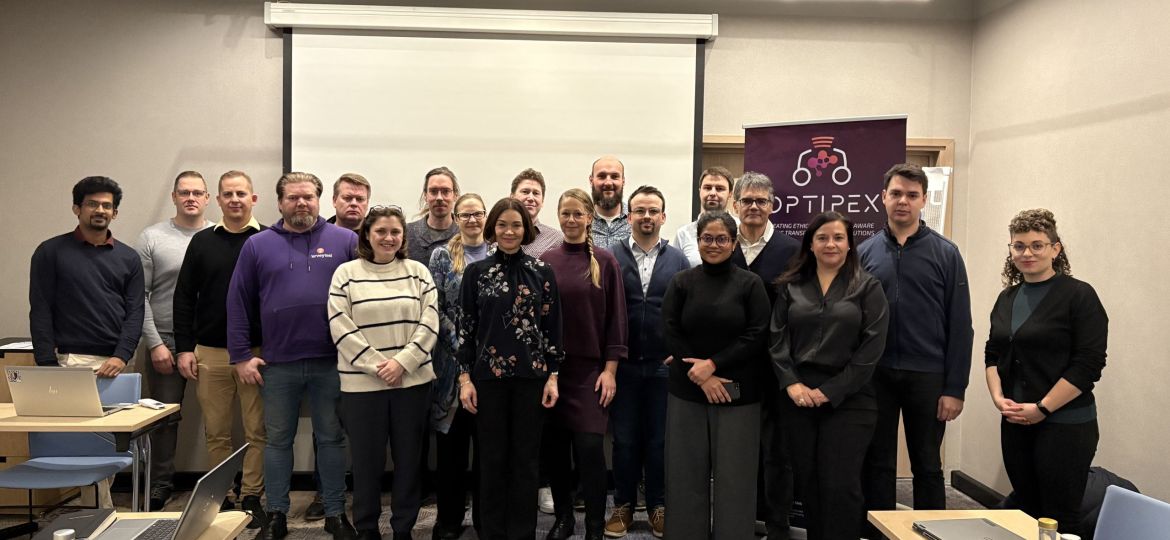
On 26th-27th November 2025, the OptiPEx consortium met in Krakow, Poland, for their 18-month Consortium Meeting, hosted by OptiPEx project partner Teleste. The aim of the meeting was for the OptiPEx project partners to share updates on their respective work packages and plan the next steps of the project in developing ethical, passenger-aware public transport service solutions.
The meeting kicked off with a welcome and general update from the OptiPEx coordinator, Dr Johanna Kallio from (full name for VTT). This was followed by a collaborative workshop on OptiPEx’s Living Lab spaces. Living Labs are active experimental research spaces where the project’s solutions are tested out in collaboration with target passenger groups, including wheelchair users, passengers with large objects, fragile passengers with limited mobility, tourists and students. The project has four Living Lab spaces, comprising of a shuttle bus in Germany and trams in Finland, Austria and Zaragoza. During the workshop, OptiPEx project partners divided into three groups and each group worked independently on one of the service concepts being developed by the project and planned upcoming demonstrations.
Following this, the University of Zarazoga presented illustrations of the 8 service concepts that the project is focussing on developing that will be used in social surveying in the upcoming project phase. During this session, discussions centred around refining the evaluation questions regarding comfort, safety and acceptance of the service concepts that the project is proposing for the user groups that OptiPEx works with. These questions will be used in surveying and focus groups once finalized to ensure that OptiPEx solutions meet passenger needs.
In the afternoon, Carr Communications then held an interactive session on the progress and future of the project’s dissemination and communication activities and ran a workshop on online communication strategies. The last session of the day was exciting demo from Skoda Digital on the movement detection tools they are currently developing for OptiPEx.
The second day of the meeting began with a General Assembly session, with topics ranging from the administrative status of the project to the ethics of the project’s use of AI. This was followed by presentations from the rest of the consortium on their respective work packages. Following these updates, Teleste led a discussion on their integrated adaptive service framework and Johannes Kepler University Linz presented their use case implementation. The day closed with planning for the next steps of the project.
The contributions and updates of all consortium members in attendance were very beneficial to the progress of the OptiPEx project, as we look forward to improving public transport for all.
