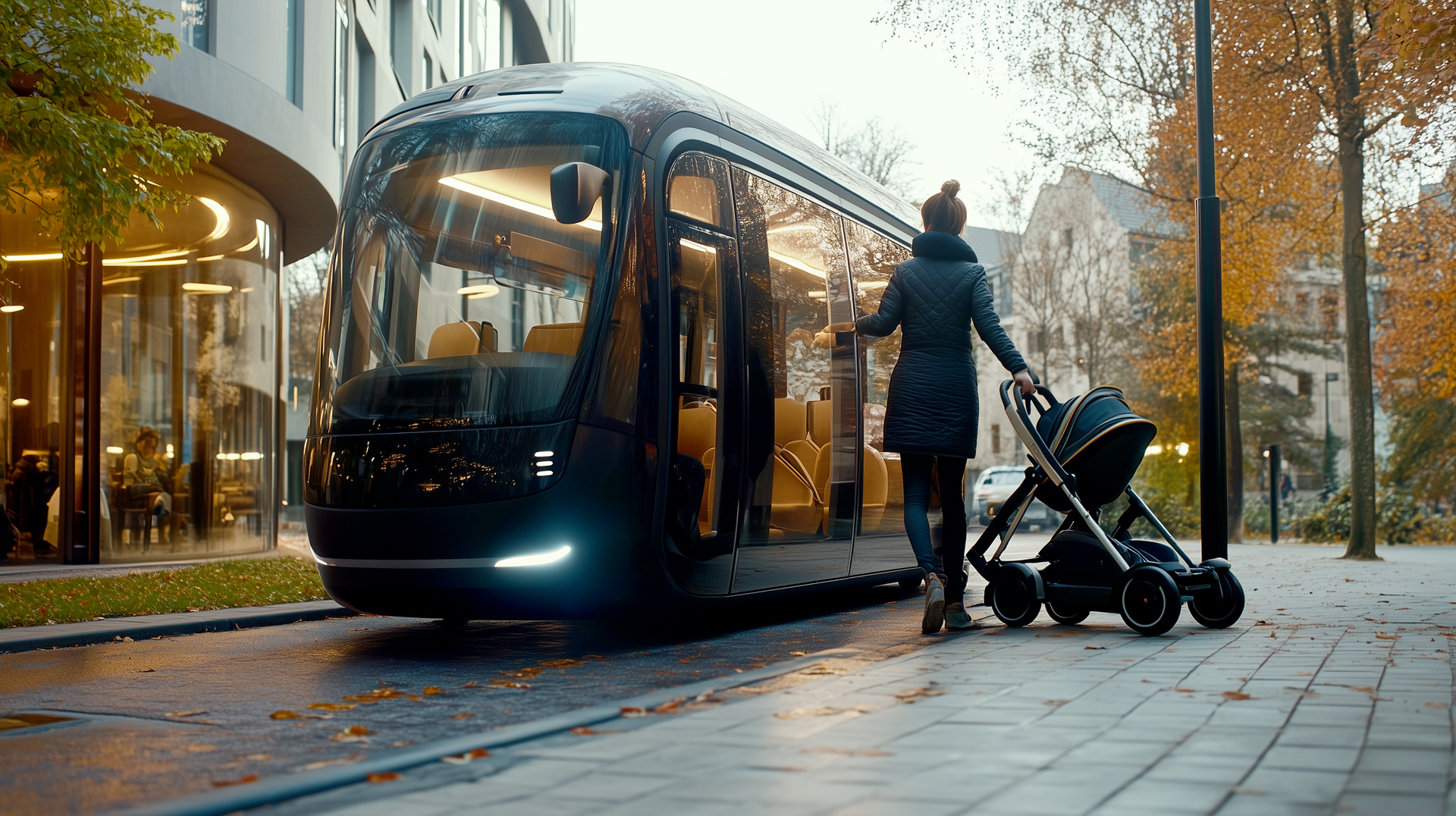
To create modern public transport systems, that promote a more equal and sustainable society, it is imperative that those who use these services are included in their reimagining. As such, OptiPEx has centred “co-creation” in our approach, where we work directly with public transport users, to let their experiences and ideas guide the solutions we develop. To ensure that our solutions serve the widest range of passengers possible, OptiPEx intentionally engaged a wide range of users who regularly face challenges in public transport, including wheelchair users, users with limited mobility and the visually impaired, users with large objects (such a prams, bicycles, or packages), tourists, and students.
To guide the direction of the development of these solutions, OptiPEx worked within the context of four predetermined “use cases”. These use cases define specific scenarios where a clear opportunity was identified for data-driven automated services to make public transport safer, more comfortable, and more accessible. During the consultations in the co-creation process, passengers identified numerous potential services (or, “service concepts”) within each of the use cases that could improve their public transport experience. These services included things like occupancy detection, automated temperature regulation, and live voice announcement transcriptions and translations. Following several rounds of consultations, the feedback has been refined into eight services. The technologies needed to implement these service concepts are now being developed and tested in our four Living Lab sites.
The four use cases that guided this process, and the final co-created service concepts, are illustrated below.
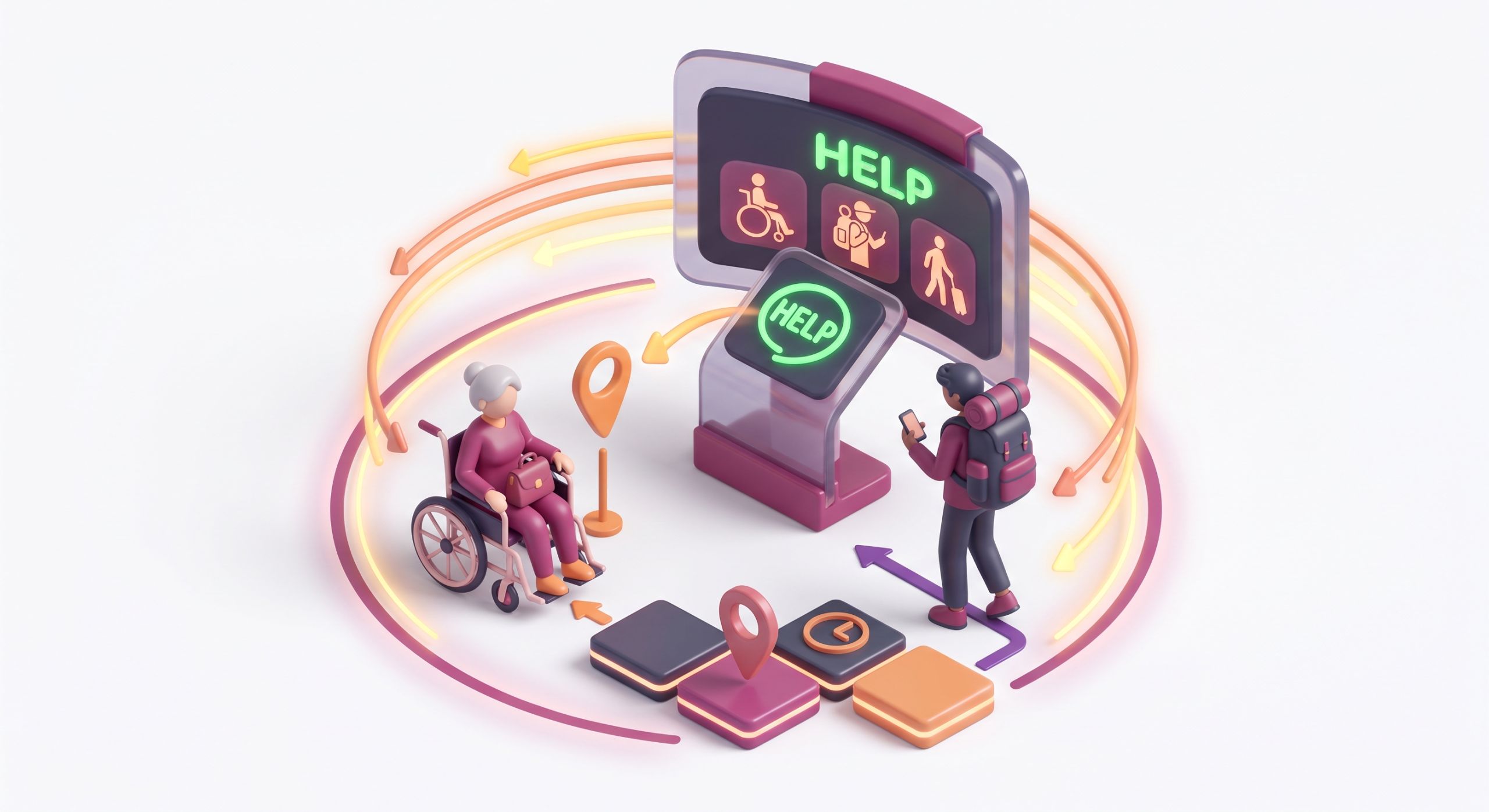
Automatic assistance for passengers with special needs
This use case focuses on recognising different passenger groups, such as people with reduced mobility, travellers with luggage, or tourists, and understanding their needs. Based on this, the system can provide timely support, such as guidance, alerts, or assistance, to make travelling easier and more inclusive.
The final services identified in the co-creation process, and the technologies that OptiPEx is developing to bring them to life, are visualised below.
This service recognises (e.g., with a video-based analysis) different passenger groups (wheelchair users, physically impaired passengers, passengers with a large item, group of people travelling together) and provides notification to drivers when they either board or offboard the vehicle. This notification indicates to the driver that additional time or assistance may be needed. In having this information, the driver can provide more attention when a person with special needs is boarding/off boarding to ensure a safe journey. The system also confirms successful boarding or off-boarding through passenger tracking.
The service provides auditory instructions for using a specific aspect of the transport service, e.g., how to purchase and validate the ticket, how to indicate that one is stepping out of the vehicle, etc. The channel does not broadcast information to everyone over the passenger announcement system, but on a specific channel that passengers can choose to connect to, providing information in several languages. The information is heard via passengers’ own devices, such as headphones or hearing aids.
The service supports the real-time detection of available seating and designated spaces for special items, and provides this information to passengers before boarding via a communication channel such as a mobile app or display. It recognises when a passenger is boarding slowly (e.g., with a pram or luggage), alerts the vehicle to keep the doors open longer, and notifies other passengers to make space. The system also monitors boarding progress, to identify whether assistance is needed, ensure passengers are safely in place before the vehicle departs.
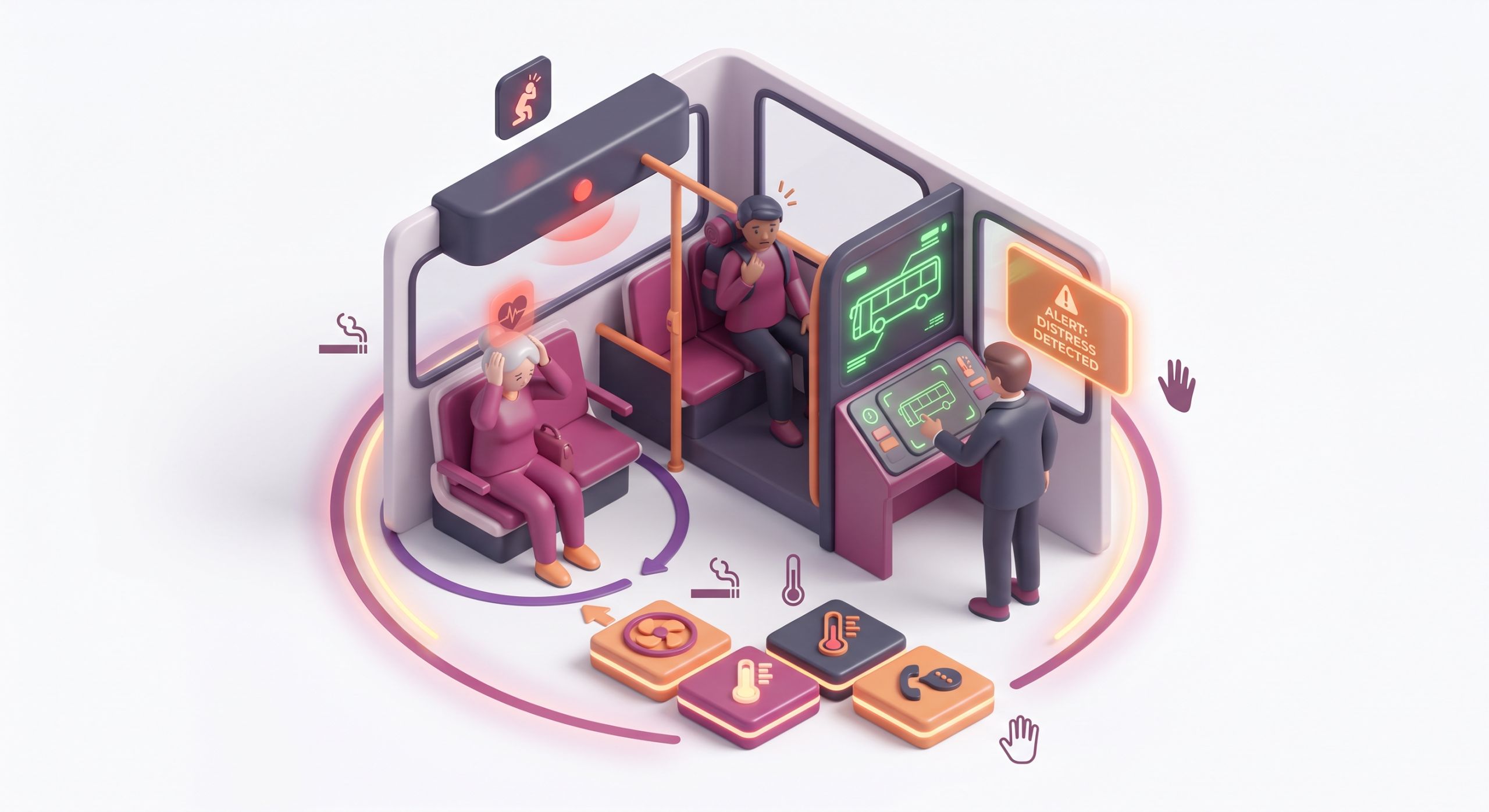
Improving on-board safety with anomaly detection
This use case aims to detect situations where something unusual may be happening. This could include signs of passenger distress (e.g. panic or discomfort) or problems in the vehicle environment (e.g. poor air quality or overheating). The system can respond by adjusting conditions or alerting staff to ensure safety and comfort.
The final services identified in the co-creation process, and the technologies that OptiPEx is developing to bring them to life, are visualised below.
The service provides clear communication and support for passengers during unexpected stops, ensuring they feel informed, reassured, and safe in case of a detected technical malfunction. This service also provides a communication option with Central Control e.g., video connection. This option provides two interaction stages: interaction with an avatar, and then, if needed interaction with a human. The service includes instructions for safe exit and alternative transportation.
The service detects and predicts environmental conditions that may cause passenger discomfort, such as temperature, humidity, CO₂ levels, lighting, and odours. It helps prevent travel sickness by either notifying the driver or automatically adjusting the vehicle environment in advance, for example through ventilation, heating, or air-conditioning.
The service identifies insecure or unsafe situations, such as the harassment of a passenger, and provides support through a staged interaction process. The system first responds through an avatar, which assesses the situation and provides initial guidance. If further support is needed, the service connects the passenger to Central Control, where an operator can provide clear instructions and contact the police or security services when necessary.
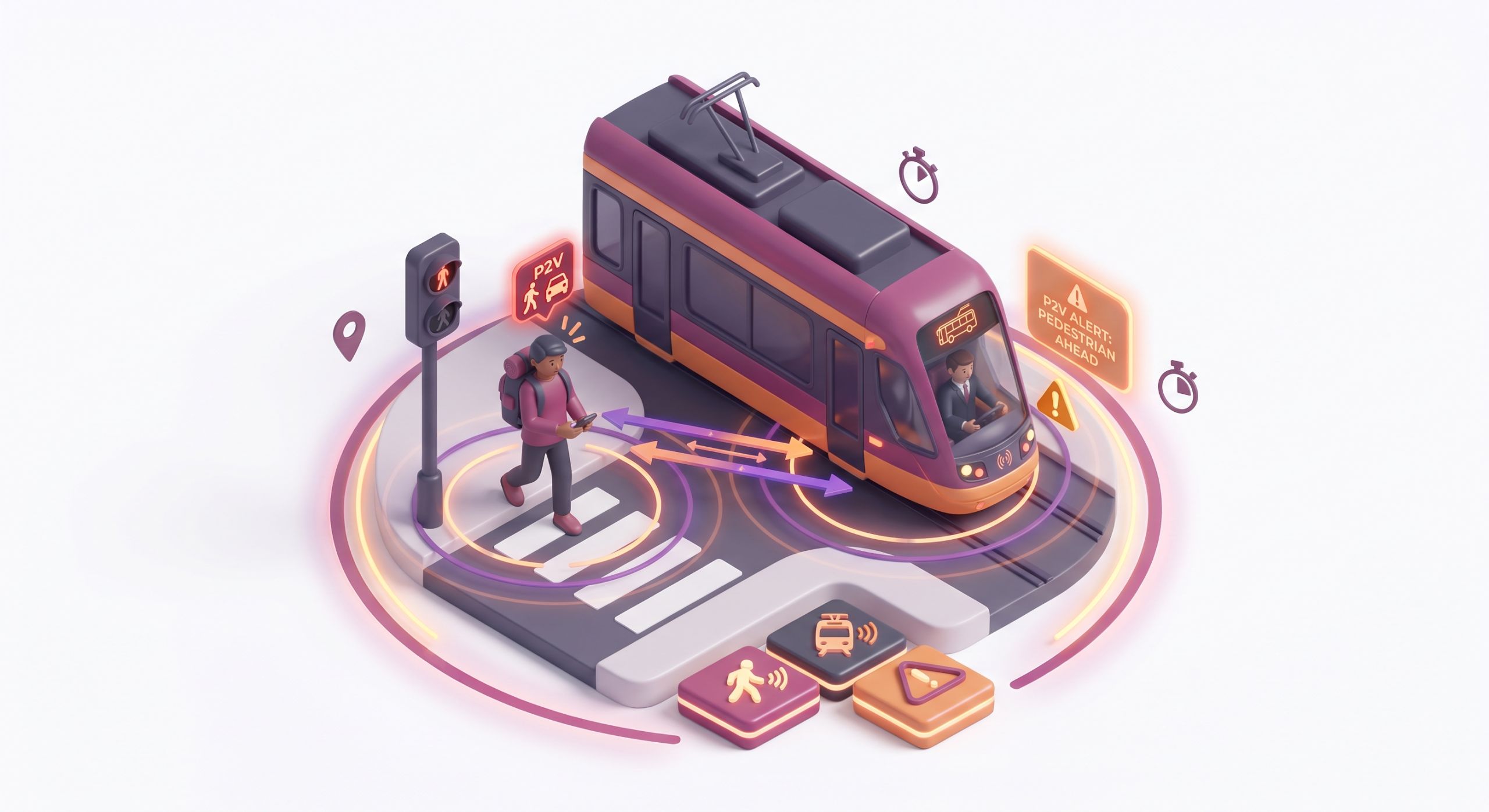
Pedestrian-to-vehicle communication
This use case focuses on safety outside the vehicle. It helps detect potential collision situations between pedestrians and trams. By enabling communication between vehicles and their surroundings, the system can warn about risks and support safer interactions in urban traffic.
The final service identified in the co-creation process, and the technologies that OptiPEx is developing to bring them to life, is visualised below.
The service accurately and quickly detects pedestrians in front of the tram and calculate the potential frontal collision risk. If a risk is detected, the service sends a timely collision warning to: a) the smartphone of the pedestrian at risk, via a visual and audio warning; b) the driver of the tram; and, c) send the location and severity of the near collisions to a dashboard of the PT service provider.
Passenger distribution optimisation
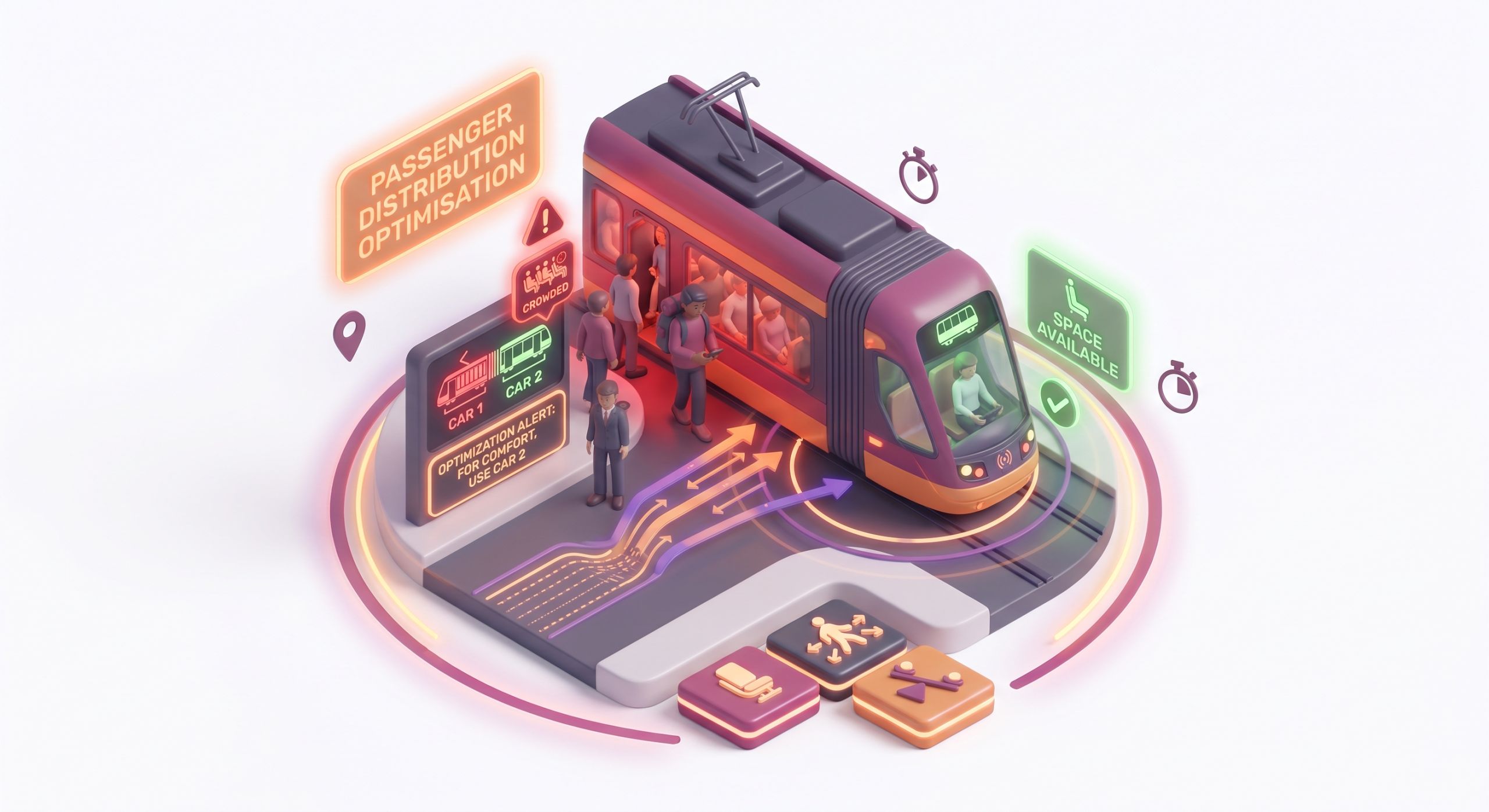
This use case aims to improve comfort by reducing crowding. It identifies how passengers are distributed within a vehicle or across vehicles and provides guidance to help passengers move to less crowded areas, making journeys more convenient and balanced.
The final service identified in the co-creation process, and the technologies that OptiPEx is developing to bring them to life, is visualised below.
The service provides real-time occupancy information, allowing users to monitor tram capacity via a smartphone app, website, or station-based audio and visual displays before boarding. This includes detailed crowding information for individual tram cars and specific designated areas, such as pram zones and space near boarding ramps.